No Product Added

By : Shah Electronics
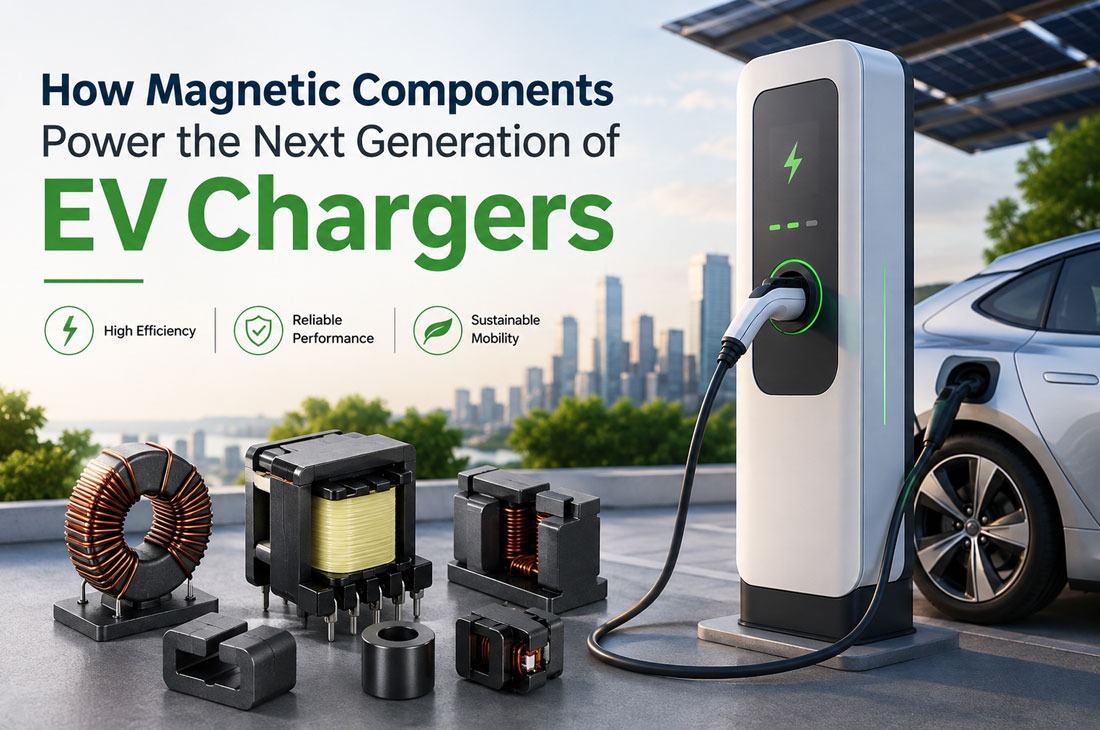
Electric vehicles are only as fast, safe, and reliable as the chargers powering them and behind every efficient charger lies a set of components most people never think about. Magnetic Components for EV Chargers are the hidden engineering backbone that makes fast, stable, and safe charging possible. From converting power to filtering noise to protecting circuits from faults, these small parts play an outsized role in the performance of every charging station on the road today.
Let's take a closer look at how these components transformers, inductors, EMI filter coils, and current transformers work together behind the scenes to shape the future of EV charging technology.
Why Magnetic Components Are Central to EV Charging
At its core, an EV charger has one job: convert grid power into the right voltage and current to safely charge a vehicle's battery often as quickly as possible. But that process involves multiple stages of power conversion, voltage regulation, noise suppression, and safety monitoring, all happening simultaneously under real-world conditions like temperature swings, load changes, and grid fluctuations.
This is where EV Charger Components built around precision magnetics come in. Well-designed magnetic parts reduce energy loss, manage heat, protect sensitive electronics, and ensure the charger performs consistently over years of daily use. Poorly designed magnetics, on the other hand, lead to slower charging, overheating, and shorter equipment lifespans.
Let's break down the key components driving this technology forward.
1. High Frequency Transformers: Faster, Smaller, More Efficient
Modern EV chargers rely on high-frequency switching to achieve compact designs without sacrificing power output. A High Frequency Transformer enables this by efficiently converting and isolating voltage at much higher switching speeds than traditional transformers.
This shift to high-frequency operation allows charger manufacturers to build smaller, lighter units while still delivering the power needed for fast charging. It also reduces core and copper losses, meaning less energy is wasted as heat during the conversion process a critical factor in DC fast chargers that operate under heavy continuous load.
2. Power Inductors: Stabilizing the Charging Current
Charging an EV battery isn't a simple, constant flow of electricity current levels shift as the battery's state of charge changes and as the charger adjusts output to protect battery health. A Power Inductor manages this by storing and releasing energy in a controlled way, smoothing out current ripple and preventing sudden spikes.
This stabilization is essential for two reasons: it protects the battery from stress during charging, and it protects the charger's internal circuitry from damage caused by unstable current flow. The result is a charging experience that's both faster and safer.
3. EMI Filter Coils: Keeping Interference in Check
High-frequency power conversion is efficient, but it also generates electromagnetic interference (EMI) that can disrupt nearby electronics, communication systems, and even the vehicle's own onboard electronics. This is where the EMI Filter Coil becomes essential.
EMI filter coils suppress unwanted electrical noise generated during switching, helping chargers meet strict electromagnetic compatibility (EMC) standards. This isn't just a regulatory checkbox clean signal flow means fewer malfunctions, less interference with nearby devices, and a more reliable overall charging experience for the end user.
4. Current Transformers: The Safety Backbone
Safety is non-negotiable in EV charging, especially with high-power DC fast chargers handling significant current loads. A Current Transformer monitors current flow in real time, enabling the charger to detect faults, overloads, or abnormal conditions instantly.
This real-time monitoring allows chargers to shut down or adjust output before a dangerous situation develops, protecting both the vehicle and the user. Current transformers also support accurate energy metering, which is increasingly important as charging networks move toward usage-based billing and smart grid integration.
The Bigger Picture: Advancing EV Charging Technology
As EV adoption accelerates worldwide, the demand for faster, safer, and more compact charging infrastructure is growing right alongside it. The magnetic components inside every charger transformers, inductors, filter coils, and current transformers are what make this progress possible.
Advancements in EV Charging Technology aren't just about faster charge times; they're about building infrastructure that's efficient, durable, and safe for widespread daily use. High-quality magnetic components are the foundation that makes this reliability achievable at scale, whether for home chargers, public charging stations, or commercial fleet charging systems.
Final Reflection
Behind every fast, reliable EV charge is a carefully engineered set of magnetic components working in the background. High frequency transformers manage efficient power conversion, power inductors stabilize current flow, EMI filter coils keep interference under control, and current transformers ensure safety through real-time monitoring.
At Shah Electronics, we design and manufacture precision magnetic components engineered specifically for EV charging applications. If you're developing next-generation charging infrastructure, choosing the right magnetics can directly impact performance, safety, and reliability. Explore our EV charging solutions to learn more.
FAQs
Q1: What role do magnetic components play in EV chargers? They manage power conversion, voltage isolation, current stability, noise suppression, and safety monitoring all essential for efficient and reliable charging.
Q2: Why are high frequency transformers preferred in modern EV chargers? They allow for smaller, lighter charger designs with reduced energy losses, making them ideal for fast and efficient power conversion.
Q3: How does a power inductor improve EV charging performance? It smooths out current fluctuations during charging, protecting both the battery and the charger's internal circuitry from stress.
Q4: What is the purpose of an EMI filter coil in a charger? It suppresses electromagnetic interference caused by high-frequency switching, helping the charger meet EMC standards and operate reliably.
Q5: Why is a current transformer important for EV charger safety? It monitors current flow in real time, allowing the charger to detect faults or overloads instantly and respond before damage occurs.
© 2025. Shah Electronics. All Rights Reserved. Terms of Use Privacy Policy Cookie Policy
Terms of Use
Privacy Policy
Cookie Policy
© 2025. Shah Electronics. All Rights Reserved.
Powered by WEBMANTRA