No Product Added

By : Shah Electronics
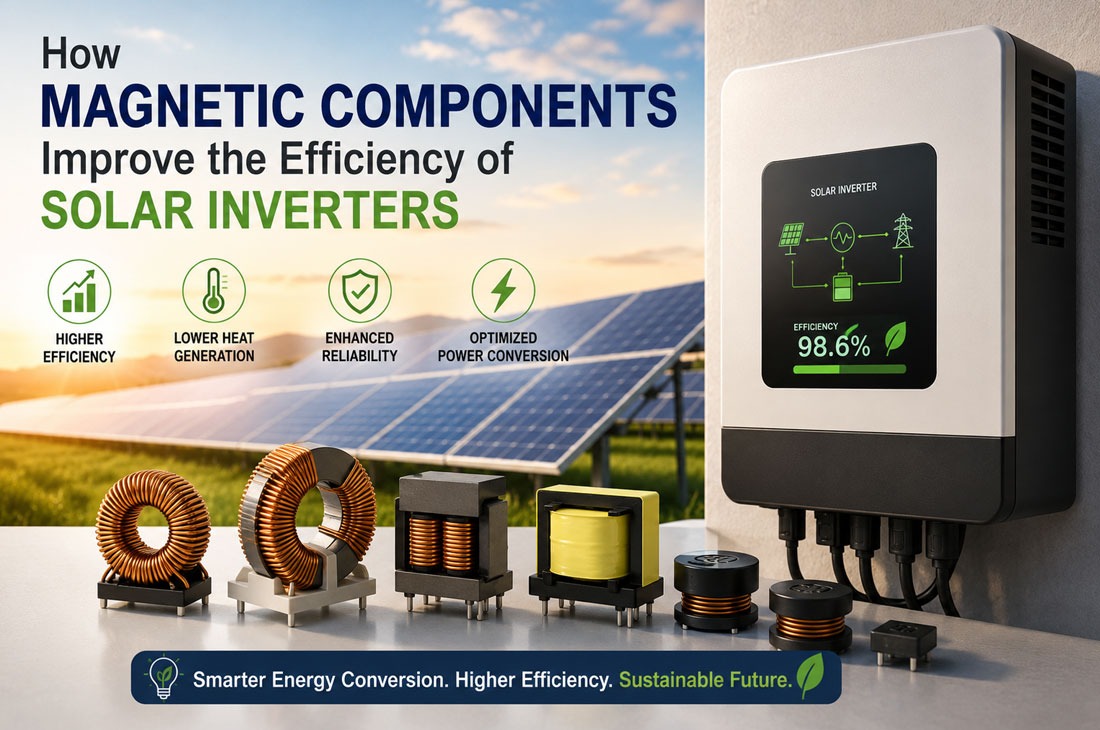
Solar power is only as good as the system that converts it into usable electricity and at the heart of that conversion process sits the Solar Inverter. While most people focus on solar panels when thinking about renewable energy, the real efficiency battle is often won or lost inside the inverter itself. Specifically, it's the magnetic components transformers, coils, and inductors that quietly determine how much power actually makes it from your rooftop to your grid or battery.
In this blog, we'll break down how these small but mighty parts work together to make modern solar inverters faster, cooler, cleaner, and more reliable.
Why Magnetic Components Matter in Solar Inverters
A solar inverter's job sounds simple: convert DC power from solar panels into usable AC power. In reality, this involves several precise stages voltage transformation, frequency switching, noise filtering, and energy storage all happening at high speed and high temperature. Magnetic components are the unsung workhorses behind each of these stages.
Without well-designed magnetics, inverters suffer from heat buildup, energy loss, electrical noise, and shorter lifespans. With the right components, you get a system that runs cooler, lasts longer, and delivers more of the energy your panels actually generate.
Let's look at the key players.
1. Solar Inverter Transformers: The Power Bridge
A Solar Inverter Transformer is one of the most critical magnetic components in a photovoltaic (PV) power system. Its core job is to manage voltage transformation and provide electrical isolation between the DC input and AC output stages.
This isolation isn't just a technical formality it protects both equipment and people from electrical faults while ensuring the inverter operates safely under varying load conditions. A well-engineered Solar Inverter Transformer also helps stabilize output voltage, which directly improves the overall energy efficiency of the system.
Because solar installations often deal with fluctuating sunlight and variable power input, the transformer's optimized magnetic core design plays a major role in minimizing power losses during conversion meaning more of your generated solar energy actually reaches your home or the grid, instead of being wasted as heat.
2. Ferrite Coils: Compact Power, Less Waste
Ferrite Coil components are widely used in solar inverters because of their high magnetic permeability and low energy loss at high frequencies. Since modern inverters operate using high-frequency switching to boost efficiency, ferrite coils are ideal they handle rapid current changes without generating excessive heat.
This means smaller, lighter inverter designs that still perform efficiently, which is especially valuable in rooftop and compact solar installations where space and weight matter.
3. High Frequency Transformers: Smaller Size, Smarter Conversion
Traditional low-frequency transformers are bulky and less efficient for modern inverter designs. That's where the High Frequency Transformer comes in. By operating at much higher switching frequencies, these transformers allow inverters to shrink in size while improving power density and conversion efficiency.
High frequency transformers reduce core and copper losses significantly compared to conventional designs, helping solar inverters run cooler and more efficiently even under continuous daily operation.
4. Power Inductors: Smoothing the Energy Flow
A Power Inductor stores and releases energy in a controlled way, smoothing out current fluctuations within the inverter's circuitry. This is essential because solar energy input isn't always constant cloud cover, shading, and panel angle changes cause voltage and current variations throughout the day.
Power inductors help regulate this flow, reducing ripple current and preventing stress on other components. The result is a more stable output, reduced electrical noise, and longer equipment lifespan.
5. EMI Filter Coils: Keeping the Signal Clean
High-frequency switching, while efficient, also generates electromagnetic interference (EMI) that can disrupt nearby electronics and even reduce the inverter's own performance. This is where the EMI Filter Coil becomes essential.
EMI filter coils suppress unwanted electrical noise, ensuring the inverter complies with electromagnetic compatibility (EMC) standards while protecting sensitive components from interference. Clean signal flow means fewer performance issues, less equipment stress, and safer long-term operation.
The Bigger Picture: Reliable Renewable Energy Components
Every one of these magnetic parts transformers, coils, and inductors falls under the broader category of Renewable Energy Components that make solar power systems viable at scale. As solar adoption grows, the demand for compact, efficient, and heat-resistant magnetic components continues to rise.
Manufacturers who invest in high-quality magnetics aren't just improving individual inverter performance they're contributing to the overall reliability and longevity of renewable energy infrastructure worldwide.
Final Thoughts
Efficiency in solar power isn't just about better panels it's about what happens after the sunlight is captured. Solar Inverter Transformers, ferrite coils, high frequency transformers, power inductors, and EMI filter coils all work together behind the scenes to reduce energy loss, manage heat, and ensure stable, safe power conversion.
At Shah Electronics, we specialize in designing and manufacturing precision magnetic components built specifically for solar and renewable energy applications. If you're developing or upgrading a solar inverter system, choosing the right magnetics can make a measurable difference in performance and reliability.
FAQs
Q1: What does a Solar Inverter Transformer do? It manages voltage transformation and provides electrical isolation between the DC and AC sides of a solar inverter, improving safety and conversion efficiency.
Q2: Why are ferrite coils used in solar inverters? Ferrite coils handle high-frequency switching efficiently, reducing energy loss and heat generation while keeping inverter designs compact.
Q3: How does an EMI filter coil improve inverter performance? It suppresses electromagnetic interference generated during high-frequency operation, protecting components and ensuring compliance with EMC standards.
Q4: What role does a power inductor play in a solar inverter? Power inductors smooth out current fluctuations, reducing ripple and stabilizing the inverter's power output.
Q5: Are high frequency transformers better than traditional transformers for solar inverters? Yes they offer smaller size, lower losses, and better power density, making them ideal for modern, efficient inverter designs.
© 2025. Shah Electronics. All Rights Reserved. Terms of Use Privacy Policy Cookie Policy
Terms of Use
Privacy Policy
Cookie Policy
© 2025. Shah Electronics. All Rights Reserved.
Powered by WEBMANTRA