No Product Added

By : Shah Electronics
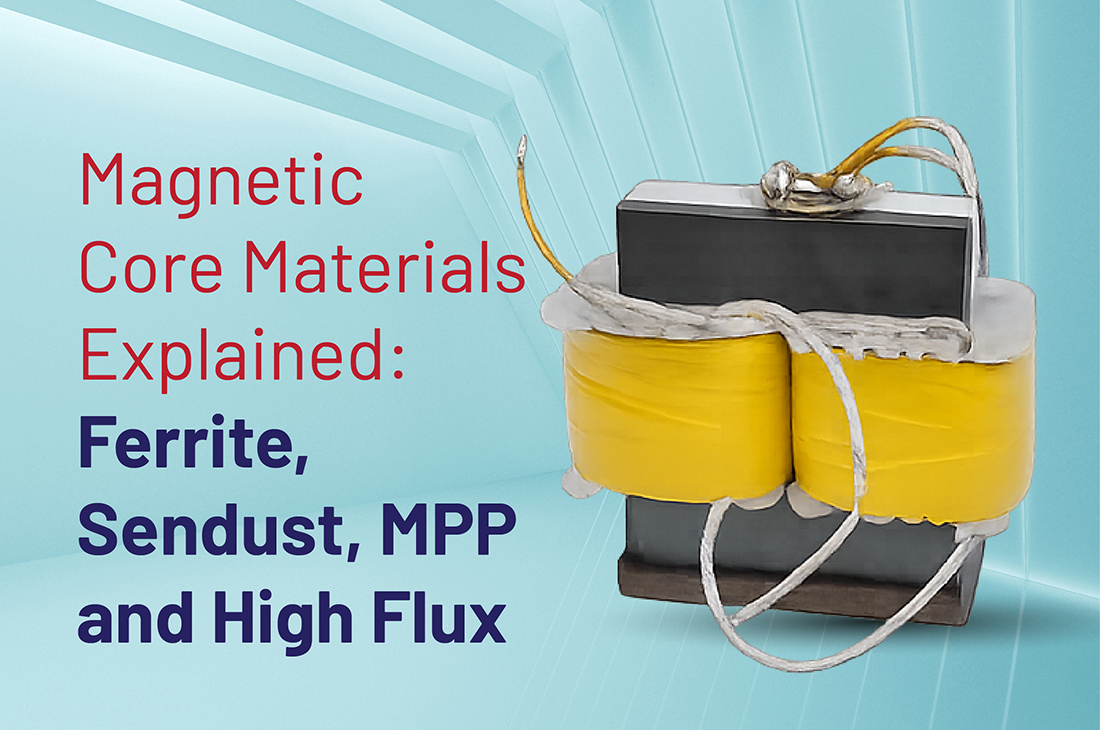
Behind every efficient transformer, inductor, EV charger, solar inverter, and power supply lies one critical component that often goes unnoticed—the magnetic core. While it may not be visible from the outside, the choice of Magnetic Core Materials directly influences efficiency, power handling, thermal performance, and product reliability.
As industries move toward electric mobility, renewable energy, and high-frequency power electronics, selecting the right magnetic core has become more important than ever. Different applications require different magnetic properties, and no single material fits every design.
Among the most widely used magnetic core types are the Ferrite Core, Sendust Core, MPP Core, and High Flux Core. Each offers unique advantages depending on operating frequency, current levels, and efficiency requirements.
In this guide, we'll explain how these soft magnetic materials differ, where they perform best, and how to choose the right material for your next design.
Why Magnetic Core Materials Matter
Magnetic cores concentrate magnetic fields and improve the efficiency of electrical components such as inductors, transformers, chokes, and current sensors.
Choosing the right Magnetic Core Materials affects:
Poor magnetic core selection can increase power losses, overheating, and reduced equipment performance.
Engineers evaluate several factors before selecting a material, including magnetic permeability, flux density, magnetic saturation, switching frequency, and eddy current losses.
Understanding the Most Common Magnetic Core Types
Every magnetic material is engineered for specific operating conditions. Understanding their characteristics makes it easier to choose the right solution.
Ferrite Core
A Ferrite Core is one of the most widely used magnetic materials in high-frequency electronic circuits. Made from ceramic compounds containing iron oxide, ferrite offers excellent electrical resistance and very low eddy current losses.
Advantages
Limitations
Typical Applications
Ferrite remains a preferred choice where high-frequency operation and low power loss are essential.
Sendust Core
A Sendust Core is manufactured from an iron-silicon-aluminum alloy known for balancing magnetic performance with affordability.
Its biggest advantage is maintaining stable inductance even under higher current conditions.
Advantages
Limitations
Typical Applications
Because of its balance between cost and performance, Sendust has become increasingly popular in modern power electronics.
MPP Core
An MPP Core (Molypermalloy Powder Core) is recognized for delivering exceptional magnetic performance with extremely low core losses.
Among all commonly used powder cores, MPP offers some of the best efficiency characteristics.
Advantages
Limitations
Typical Applications
When efficiency and stability are more important than cost, MPP is often the preferred choice.
High Flux Core
A High Flux Core is produced using a nickel-iron alloy specifically designed for applications requiring high magnetic saturation.
Its ability to carry higher current before saturation makes it suitable for demanding power applications.
Advantages
Limitations
Typical Applications
For applications requiring high current and compact designs, High Flux Core delivers outstanding performance.
Comparing Magnetic Core Materials
Each material offers different benefits, making application requirements the deciding factor.
Factors to Consider During Magnetic Core Selection
Choosing the right magnetic core involves more than comparing materials.
Design engineers typically evaluate:
Proper magnetic core selection helps improve efficiency while reducing unnecessary heat generation and energy loss.
Applications Across Modern Industries
The demand for advanced Magnetic Core Materials continues to grow as industries adopt electrification and renewable technologies.
Today's magnetic cores are commonly found in:
As power electronics continue to evolve, manufacturers increasingly rely on optimized power magnetic components to improve efficiency and reliability.
Why Shah Electronics Is a Trusted Partner
Selecting the right magnetic material is only part of the equation. Working with an experienced manufacturer ensures consistent quality, precision engineering, and dependable performance.
Shah Electronics offers a wide portfolio of high-quality magnetic core solutions designed for modern power electronics, EV applications, industrial automation, transformers, inductors, and renewable energy systems.
With expertise in Ferrite Core, Sendust Core, MPP Core, and High Flux Core technologies, Shah Electronics helps customers choose the most suitable solution based on electrical performance, thermal requirements, and application-specific needs.
Conclusion
As electronic systems become smaller, faster, and more energy-efficient, selecting the right Magnetic Core Materials has become increasingly important.
Whether your priority is high-frequency performance with a Ferrite Core, balanced efficiency using a Sendust Core, ultra-low losses from an MPP Core, or superior current handling with a High Flux Core, understanding the characteristics of each material enables smarter engineering decisions.
By evaluating factors such as magnetic permeability, magnetic saturation, flux density, core loss reduction, and eddy current losses, engineers can design power systems that are safer, more reliable, and built for long-term performance.
With trusted expertise and precision magnetic solutions, Shah Electronics continues to support manufacturers across industries in developing next-generation transformers, inductors, EV systems, and renewable energy technologies.
FAQs
1. What are Magnetic Core Materials?
Magnetic Core Materials are soft magnetic materials used in transformers, inductors, and other power magnetic components to improve magnetic efficiency, reduce losses, and support efficient energy transfer.
2. Which magnetic core material is best for high-frequency applications?
A Ferrite Core is generally preferred for high-frequency applications because it offers low eddy current losses, excellent EMI suppression, and efficient performance.
3. What is the advantage of a Sendust Core?
A Sendust Core provides excellent DC bias performance, good magnetic saturation, and reliable core loss reduction, making it ideal for power inductors and EV charging systems.
4. Why choose an MPP Core?
An MPP Core delivers extremely low core losses, high magnetic permeability, excellent temperature stability, and superior inductance stability for precision power electronics.
5. Where is a High Flux Core commonly used?
A High Flux Core is widely used in EV power electronics, renewable energy systems, industrial automation, and high-current inductors because of its high saturation capability.
6. How do I choose the right magnetic core material?
The best magnetic core selection depends on operating frequency, current level, magnetic permeability, saturation requirements, thermal conditions, efficiency goals, and the specific application.
© 2025. Shah Electronics. All Rights Reserved. Terms of Use Privacy Policy Cookie Policy
Terms of Use
Privacy Policy
Cookie Policy
© 2025. Shah Electronics. All Rights Reserved.
Powered by WEBMANTRA